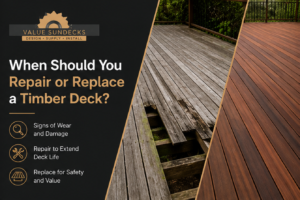
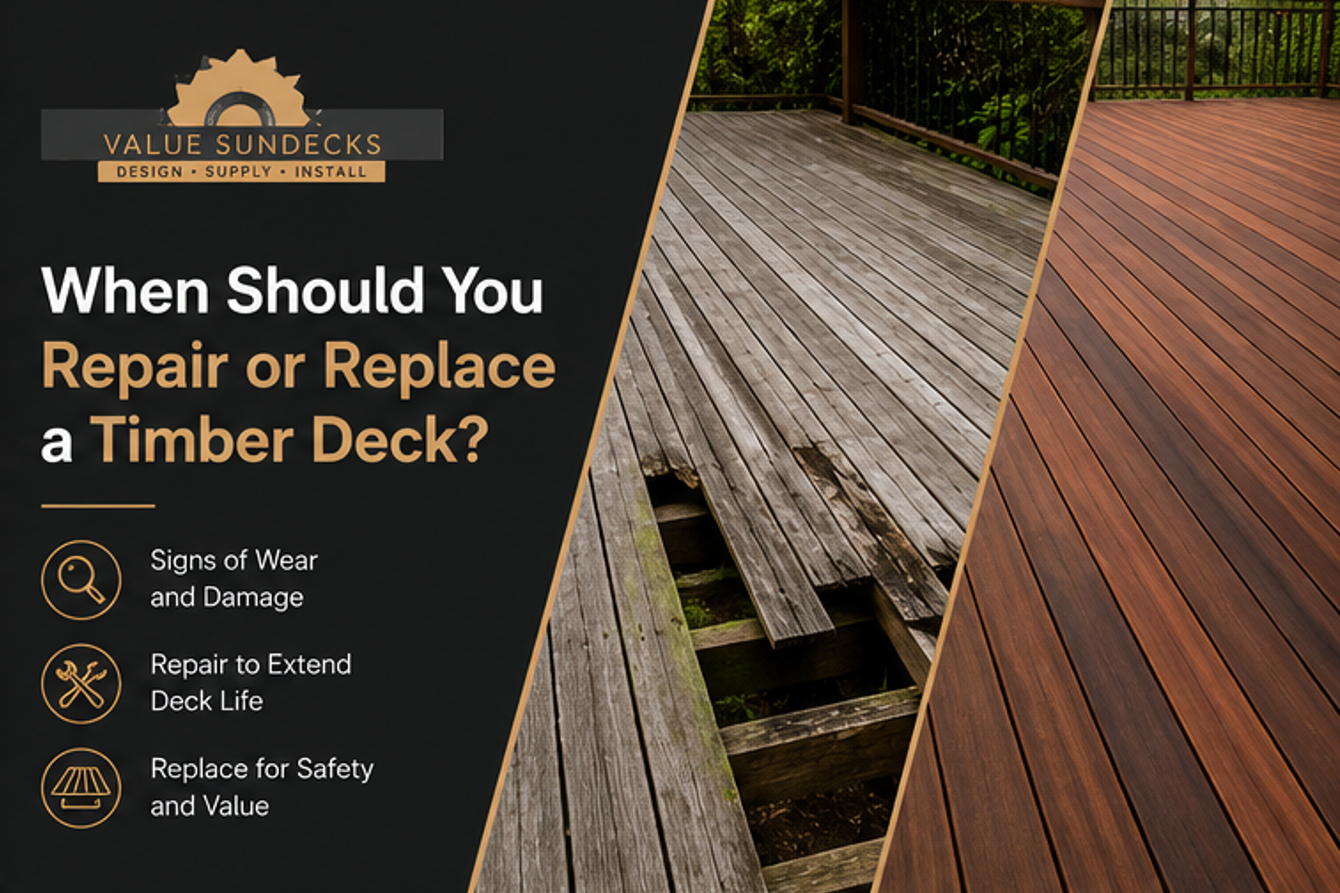
When Should You Repair or Replace a Timber Deck?
A timber deck is a valuable addition to any outdoor living space, providing an attractive and practical area for relaxing, entertaining and enjoying your property. However, because timber is constantly exposed to sunlight, rain and moisture, it naturally requires maintenance over time.
One of the most common questions homeowners face is: Should you repair or replace a timber deck?
The answer depends on the extent of the damage, the condition of the supporting structure and how frequently repairs are required. Minor problems can often be corrected with professional timber deck repair, while extensive structural deterioration may make replacement the safer and more practical option.
Knowing what signs to look for can help you make the right decision before small problems develop into larger and more expensive repairs.
Check the Condition of Your Decking Boards
Your decking boards are usually the first area to show signs of ageing.
Constant exposure to weather can cause timber boards to fade, crack, split or warp. In many cases, this does not mean the entire deck needs to be replaced.
Look for signs such as:
- Cracked or splitting boards
- Loose decking boards
- Warped timber
- Soft or deteriorating wood
- Visible signs of rot
- Loose or rusted fasteners
If only a few boards are damaged and the supporting structure remains in good condition, replacing individual boards may be sufficient.
Value Sundecks provides professional timber home repairs in Durban that can address damaged decking boards and structural timber components.
When Is Timber Deck Repair the Better Option?
Repairing your deck can be an effective solution when the damage is limited to specific areas.
For example, individual boards may deteriorate faster than the rest of the deck because they receive more moisture or direct sunlight. Replacing these boards can restore the surface without requiring a complete rebuild.
Timber deck repair may be suitable when:
- Only a small number of boards are damaged.
- The joists and supporting structure remain strong.
- Fasteners or connections have become loose.
- The deck mainly has cosmetic weathering.
- The overall structure remains stable.
Addressing these problems early can also help prevent deterioration from spreading to other parts of the deck.
Can an Old Timber Deck Be Restored?
An old-looking deck does not necessarily need to be replaced.
Timber naturally changes colour as it is exposed to sunlight and weather. A grey or faded appearance may simply indicate surface weathering rather than serious structural damage.
Depending on its condition, timber deck restoration may include cleaning, sanding, replacing damaged boards and applying an appropriate protective treatment.
If the underlying structure remains strong, restoration can significantly improve the appearance and usability of an ageing deck.
For additional advice, read How to Bring Old Decking Back to Life to understand how older timber decking can potentially be restored.
When Should You Replace a Timber Deck?
There comes a point when continuously repairing an ageing deck is no longer the most practical solution.
A full timber deck replacement may be worth considering when deterioration affects large sections of the structure rather than individual boards.
Warning signs can include:
- Widespread timber rot
- Multiple damaged joists
- Deteriorating support posts
- Significant sagging
- Excessive movement when walking
- Unstable balustrades
- Large areas of damaged decking
- Frequent repairs becoming necessary
Structural problems are particularly important because the visible decking boards are only one part of the complete deck.
If the components supporting the deck have significantly deteriorated, a professional assessment can determine whether repairs are still practical or whether replacement would provide a better long-term solution.
Pay Attention to the Supporting Structure
One of the biggest mistakes homeowners can make is judging a timber deck only by its visible surface.
A deck may appear reasonably attractive while deterioration is developing underneath.
The supporting structure may include joists, beams, bearers and posts. These components help carry the weight of the deck and the people using it.
Signs such as sagging, excessive movement or unstable sections should therefore not be ignored.
Professional inspection can help identify whether deterioration is limited to surface boards or extends into important structural components.
Consider How Often the Deck Needs Repairs
Occasional wooden deck repairs are normal, particularly as a deck gets older.
However, repeated repairs can indicate a larger problem.
If you find yourself replacing boards regularly, repairing structural components or dealing with recurring rot, it may be worth comparing the cost of ongoing repairs with the cost of replacement.
Replacing an ageing structure can sometimes provide better long-term value than continuously repairing different sections.
The decision should be based on the overall condition of the deck rather than one damaged area.
Why Regular Timber Deck Maintenance Matters
Preventative maintenance can significantly reduce the likelihood of major deck problems.
Regular inspections allow you to identify damaged boards, loose fasteners, moisture problems and early deterioration before they spread.
Homeowners should periodically check their decks for:
- Cracks and splitting
- Loose boards
- Soft or deteriorated timber
- Loose screws or fasteners
- Water accumulation
- Unstable railings
- Changes in structural stability
Cleaning the deck and applying suitable timber treatments can also help protect the wood against environmental exposure.
You can learn more about protecting ageing decking in What Is the Best Treatment for Old Wooden Decks?.
Repair or Replacement: How Do You Make the Right Decision?
The decision to repair or replace a timber deck should ultimately depend on the condition of the entire structure.
If damage is isolated and the supporting structure remains strong, targeted repairs may extend the deck’s useful life.
If deterioration is widespread, structural components have been compromised or repairs are becoming increasingly frequent, replacement may provide a more practical long-term solution.
A professional deck assessment can help determine the extent of the damage before you commit to either option.
Frequently Asked Questions
How do I know if my timber deck needs repairing?
Look for cracked or loose boards, soft timber, unstable railings, loose fasteners, sagging sections or unusual movement. Isolated damage can often be repaired, while widespread structural deterioration may require more extensive work.
Can rotten timber deck boards be replaced individually?
Yes. If the rot is limited to individual decking boards and the supporting structure remains in good condition, those boards can often be replaced without rebuilding the entire deck.
Does a grey timber deck need to be replaced?
Not necessarily. Grey timber is often caused by weathering and UV exposure. If the wood and supporting structure remain sound, cleaning, sanding and protective treatment may help restore the deck.
When should I replace my timber deck instead of repairing it?
Replacement may be appropriate when there is widespread rot, significant structural deterioration, unstable sections or repeated repair requirements across multiple areas of the deck.
How can I make my timber deck last longer?
Regular inspections, cleaning, appropriate timber treatments and prompt repairs can help protect your deck. Fixing small problems early can also prevent deterioration from spreading into structural components.
Conclusion
Knowing when to repair or replace a timber deck can help homeowners maintain a safe, attractive and functional outdoor living area.
Minor problems such as individual damaged boards, loose fasteners and surface weathering can often be addressed through professional timber deck repair and restoration. More extensive deterioration involving joists, beams or support posts may require substantial repairs or complete replacement.
Regular maintenance and early attention to damage can help extend the useful life of your deck and reduce the risk of more expensive problems developing later.
If your timber deck is showing signs of deterioration, having it professionally assessed can help you understand the condition of the structure and determine the most appropriate solution.
Does Your Timber Deck Need Professional Attention?

Whether your deck needs maintenance, repairs, restoration or more extensive work, Value Sundecks can help you determine the right approach for your outdoor space.